
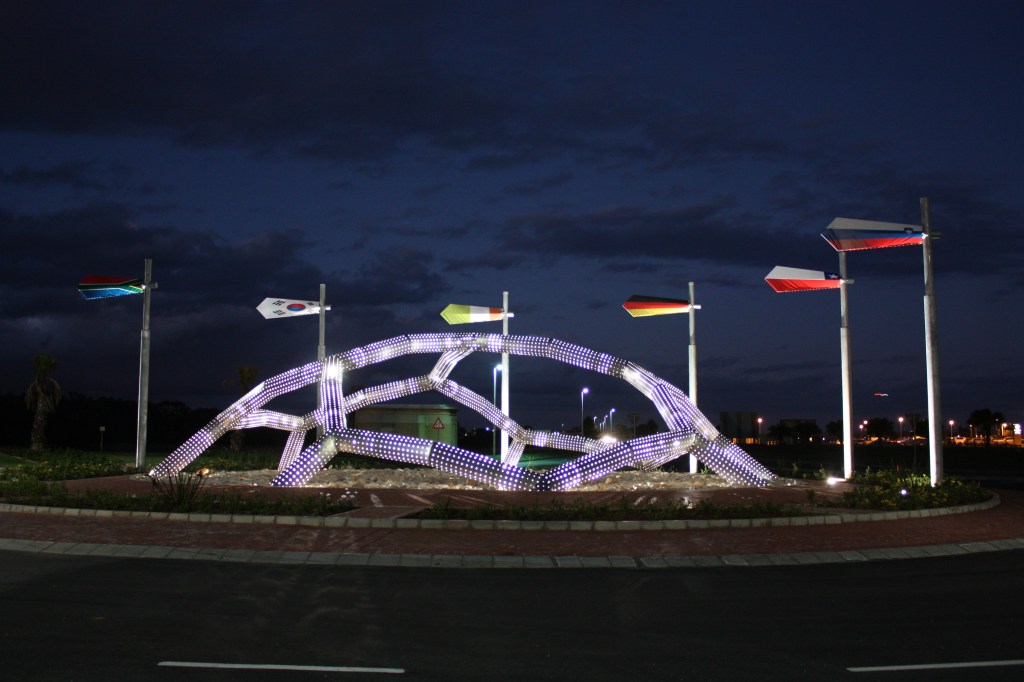
For the FIFA 2010 World Cup, while the majority of spending in Nelson Mandela Bay Municipality was directed toward stadium construction and public transport infrastructure, the municipality also focused on creating “place marking Icons” to build excitement for the event. One of the standout projects involved the installation of two stainless steel structures on the traffic circles near Port Elizabeth International Airport. These forms were part of a broader effort to enhance the city’s image and create a lasting visual connection to the tournament.
The design of these stainless steel icons needed to balance visibility and safety, being bold enough to capture attention while transparent enough to avoid creating traffic hazards. Close collaboration with road engineers was crucial to ensure the structures were completed in time for the anticipated influx of World Cup visitors. The end result is reminiscent of war memorials, symbolizing the long-lasting impact of the World Cup on Port Elizabeth, much like historical monuments reflect past events.
Upon arrival in the city, visitors were immediately greeted by these gleaming stainless-steel structures, making them feel that Port Elizabeth itself, not just the stadium, was a central part of the global tournament. The structures featured “flags” that pointed toward the stadium, with removable sleeves that originally displayed the flags of the nations competing in the 2010 World Cup. These sleeves are designed to be interchangeable, allowing the city to modify the display for future events, such as a floral theme for a flower show or other major events.
The stainless steel icons remain functional and visually striking both during the day and at night. Illuminated from within by low-energy lights, the structures glow after dark, creating a luminescent display that has become a popular and enduring landmark, cherished by both residents and visitors. These “place marking” structures not only celebrated the 2010 World Cup but continue to serve as a symbol of Port Elizabeth’s vibrant role as a host city.


 noh ARCHITECTS