The End of Excellence?

(This Piece first appeared in The Herald on 25 July 2014 and is based on a talk I gave at the Athenaeum that week)

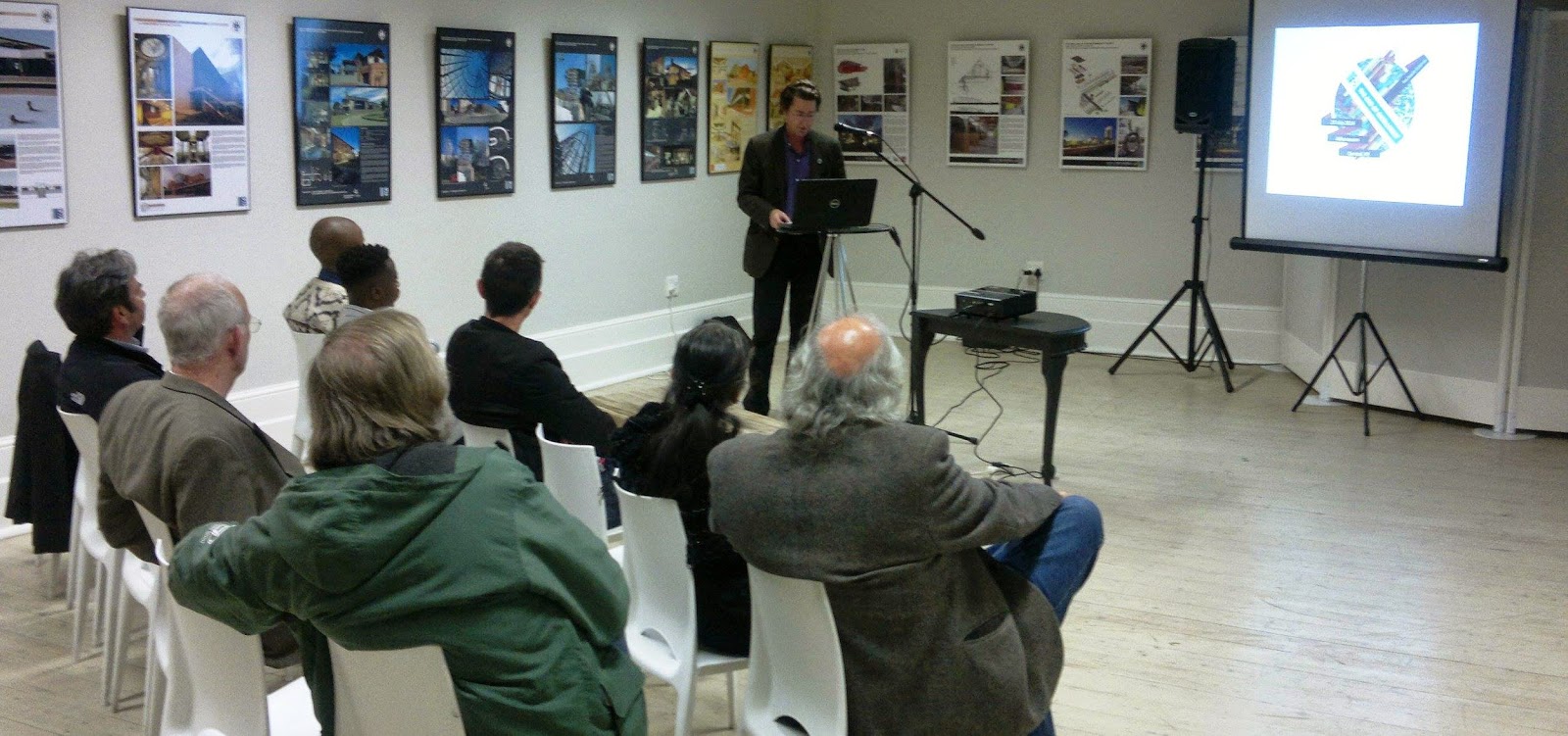
I have never visited Paris, but I have, just last night, visited a fantastic exhibition of excellent buildings and spaces at the grand old Athenaeum, in Central Port Elizabeth, entitled; “100% Paris”. You can still catch it. It runs until 25 July 2014. The exhibition is part of a collaborative between the Alliance Francaise, The ECIA, the NMMU School of Architecture and the MBDA. The ECIA’s Regional Awards programme is on Exhibition and so is some very interesting work by the MBDA and NMMU on the Baakens River Valley.


Visiting exhibitions and events of this sort always gets me thinking and this time was no exception. I gave a small talk on behalf of the ECIA and there was some very stimulating discussion that followed. The event got me thinking about “Excellence” and especially excellence in the built environment. What is it? What is its purpose? Has its time passed? Is excellence and means to an end? Or is excellence an end in itself? It got me thinking about “The End of Excellence”.

Because, as I said at the talk last night, I am quite sure, if you were to ask anyone who ever visited, Paris, or London or any other beautiful city, to speak of what was most memorable of their visit, they would speak of the built environment. They would speak of the bridges, the steeples and the spires. They would speak of the parks, the walkways and the avenues.

I am pretty confident, that after having returned from London or Paris,  you would not speak of how neatly the accountants prepare their balance sheets, or with what precision the doctors sew up their stitches after an appendectomy.  Yes, of course these disciplines are indispensable to our civilisation, but we must confront the truth that there is something very significant and lasting about the impression that the built environment makes on us.
So, what about Port Elizabeth? Yes, we have some beautiful places. We have the Donkin Memorial, City Hall and Feather Market Centre. We have an extraordinary collection of buildings, parks and spaces in Central. There are some parts of our city that are truly excellent, but  many of these are all very old buildings and places.  So, I ask: are we still able to create excellent spaces? Or, have we moved into and era beyond “ The End of Excellence”?

I ask this because, excellence is under threat. Around the world it is being beaten up and kicked in the teeth. Excellence is being bludgeoned simultaneously by a gang of three thugs. I am not afraid to name them.


Thug number 1 – “Mediocrity”

“Mediocrity” is a politically correct thug. “Mediocrity” says that perusing excellence is unfair because then not everyone gets a chance. “Why should people that are un-talented, unmotivated and generally useless not also get a chance?”

Thug Number 2 – “Competition”

“Competition” is dressed like a respectable accountant, but still very much a thug. “Competition” says that “if it can’t be measured, it can’t be managed”.  “What makes Central better than Charlo? What makes the North End Stadium better than the Boet Erasmus? What makes Architect A, better than Architect B? Show me the calculation! Is it longer? Is it heavier? Does it have more light bulbs?”

Thug Number 3 – “Compliance”

“Compliance” is a mouse-like, lawyer-like, thug? Compliance says “excellence” what is this? Where in the rules does it say we have to create an excellent city? “Compliance” says, we have made rules designed for stopping corruption and thievery, “What more do you want?”.
The sad news is that these three thugs have taken over public and private sector property developers. The people that build our cities are now controlled by these thugs or have become their agents.  Where excellence still happens, it happens because of the super human efforts of isolated individuals in the public and private sectors, who, in spite of the odds being stacked against them, see to the delivery of excellent buildings and spaces. Even today. Even in our city.


 The private sector routinely deliver s mediocre buildings and spaces because it appeals only to the mediocre tastes and expectations of you and I, the people who frequent their mindless malls, rent spaces in their sterile office parks. The public sector routinely delivers a mediocre built environment, for the same reason as the public sector, but they but they are also absolutely determined to see the each and every individual participant in the long sequence of events that leads up to anything getting built, is equally as mediocre, “So that everyone can get a chance.”
The private sector explains that it has no choice, it must remain competitive. It explains that the stock market will punish it if it were to waste money on creating an excellent built environment. “So as long as our competitors can get away with building poor environments, then so will we.” The Public sector, explains that “We are dealing with tax payer’s money here. There must be competition, to show that we paid bottom dollar.”
The private sector says to the public. “I have done everything you have asked of me. I have got the EIA, the TIA and the HIA. I am exhausted. I have complied. Where does it say I have to develop excellent buildings?”  The public sector says pretty much the same, but is even more exhausted by the complex internal compliance procedures required to so much as move a pencil from one desk to another. There really is no time and energy left to champion such niceties as “excellence”.
Yes, it is sad. Yes, it is demoralising. But it is the brutal truth. Excellence everywhere is under attack and none so more as in the built environment. But, I ask:  Is it the End of Excellence?
My attempt is to convince you that it is not the end. Yes, we are under attack from these three mindless thugs. Yes we are bleeding. But there are things we can do. 

And while there are still things that can be done, it cannot be the end.

Off the Grid – small steps

As I sit inside, warm against the weather, I can hear the winter rain falling lightly outside. At the farm, the fields are green, but it has not been that wet. I can monitor how wet it has been by the level of the Kragga-Kamma lake I drive past on the way to the farm.

Pebblespring Farm has no municipal water. It has no electrical connection. It has no sewer connection. This is of course not a major problem yet, because no one is living there full time. But we will.

In the meantime, the cattle need water and the trees we have potted need water and for this we have installed two water tanks. First a 1 kl tank and then a 5 kl tank. From these tanks I run draglines (very strong, flexible 25 mm diameter black plastic pipe) to the cattle feeding troughs that I have made by cutting in half a 200l barrel.

We installed this 1 kl tank first last year sometime. (I remember posting a video)

5 kl tank. Best price from PennyPinchers

This has been relatively easy to achieve. For now at least all the pasture that I have accessed is at a lower level than the water tank, so I can gravity feed the water. No pumping required. The pasture that is furthest away (and where the cattle are grazing this week) cant be reached by the 100m dragline. For now, until I get around to buying more dragline, I bring water to this pasture in the wheelbarrow carrying a 25l container. I suppose it depends which way you look at it. Some of us will think its a real pain in the ass to trudge up and down in the biting winter wind pushing a reluctant wheelbarrow across lumpy pasture. But those same number among us, find it quite normal, acceptable and pleasurable to drive clear across town to pay for the privileged of battling against sweaty gym equipment designed to give just the correct amount of resistance and strain to mimic pushing a heavy wheel barrow across lumpy pasture. Like with most things its the story I tell myself about what’s going on that is more powerful to me than the actual circumstance. Its the meaning I give to what I do that makes it pleasurable or painful. Even pain is not that  bad, when I am able to develop a story that makes the pain appropriate.US Marines have a saying “Pain is the sensation caused by weakness leaving the body”. Absolute bullshit of course, no hard science at work here, but I marvel at the hundreds of thousands of Marines that would have found push-ups that much more bearable because of that “story”. The story I give myself about the wheelbarrow is that I am giving myself a perfect cardiovascular workout with just the right proportion of weight training.

Wheelbarrow Pilates

Anyway, I really did not want to let you to sidetrack me with the wheelbarrow. I wanted to talk about rainwater and “Off The Grid” stuff. Because, I really can see how we have become caught in the idea that supplying our homes with running water is an incredibly complicated thing that we can only achieve at the mercy of a massive bloated Municipality, with teams of clever engineers and armies of unionised workers. If running water intimidates some of us, then electricity send the rest of us running for the hills. Surely the only possible way to get light into our living room, heat the bathwater, roast the chicken and play “Days of Our Lives” on the TV, is to build massive multi billion dollar coal powered fire stations thousands of kilometres away in Limpopo province?

You see, I have got a sneaky suspicion that is just not that complicated to go “off the grid”. Of course those that make a living out of selling electricity and piped water continue to work very hard to convince us that “Off the Grid”, is the domain of hippies, homeless and hillbillies. Perhaps all the propaganda is completely spot on. Perhaps there is no other way than for us to trek to the office day after day, to earn the salary to pay the taxes to fund the massive infrastructure that will be able to sell to us, at inflated rates, the water and electricity we need to carry on our civilised existence. Yes, they may be right, but there is a small possibility, a minute chance, that the experiment that I am slowly getting going with, can show that I can set up reasonably easily off the grid water and power system that can keep me and my family comfortable enough for us to continue in the experiment.
My promise is to take you along with me. Let you in to all the steps, all the mistakes. Maybe we will learn together that we are not quite ready for this, or maybe we will learn that many others can easily copy me. This experiment is not trying to establish whether the technology exists to go off the grid. The technology has been available since the sixties. This we know. My experiment is a personal one and a family one. It has to do with my budget, my family’s consumption patterns, our climate’s demands on heating and cooling. The experiment is also very specific to the site. I have the advantage of not having any existing services connection to the site. So I am able to compare the cost of bringing these connections to the site to the cost of rainwater systems and Photo Voltaic in and wind turbines. Even the fact that we will be starting a house from scratch means that we can make choices that reduce our electrical load. We can orient a new house to harvest daylight. We can manipulate geometry to shade the house in the summer months but to gain the warmth of the winter sun. We can manipulate building materials to keep the warmth in in winter and out in summer. We are able to make choices like cooking and heating with the wood that is plentiful on the farm or heating bathwater with a solar geyser. All of the these choices may not be immediately available to many of you reading this because you are living in a house built when people did not really think about this kind of stuff, where the idea of ripping out an expensive (inefficient) piece of equipment, to be replaced with another (less inefficient) expensive piece of equipment is a lot more difficult than mine would be where I am starting from scratch. But you are welcome to come along with me an follow our progress.
In the meantime, tonight, the rain is filling my water tanks free of charge and free of fluoride : )

Who Built a Crooked House?

(I wrote this piece 7 Years ago today for the Urban Circle Blog – but I can see now  how its relevant this site as well)


Architects are living through fantastic times in this city and South Africa generally. Not only is there an abundance of work, but a heightened awareness of the value that Architects are able to add to the built environment. There is such a lot of “cool” stuff to do, that I am worried that we try to do too much and loose out on the enjoyment of doing one thing well. I believe though that it is better to take action than to worry! 

…So I have taken action. 

I love beautiful buildings. Big buildings, small buildings. I love being inside them. The light, the sound, the way people use them. The way they sit in the city or landscape. I love the way these buildings are put together. 

There is magic in that; and I am starting to reconnect with this magic.. What surprises me is that I have felt that reconnection not in the billion rand, high visibility, world beating projects running through our office, but rather in something a little more modest….

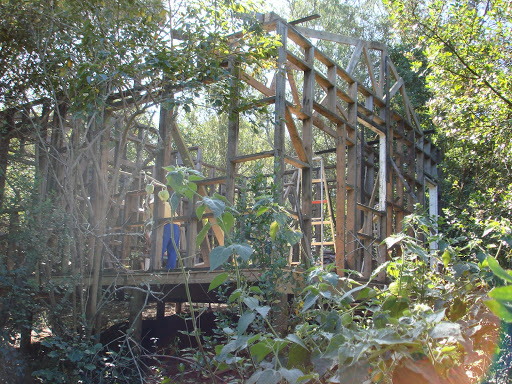
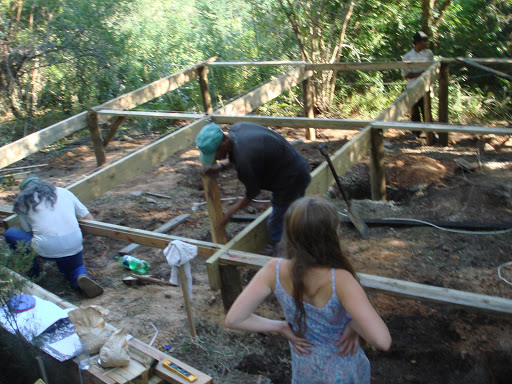
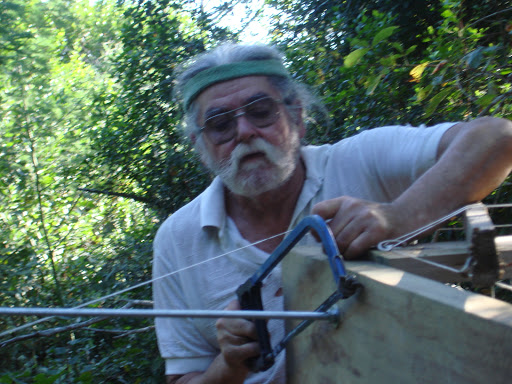
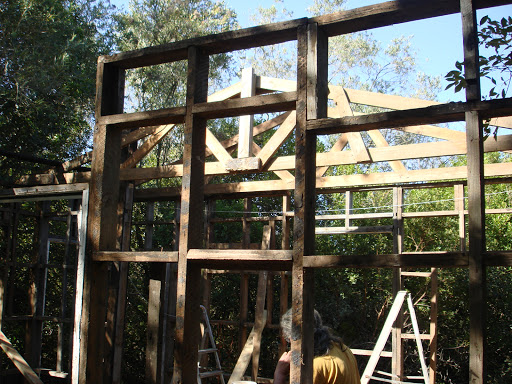
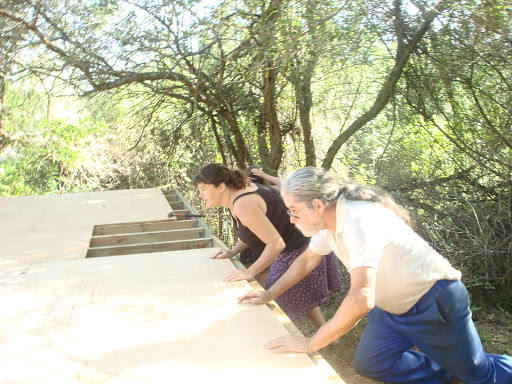
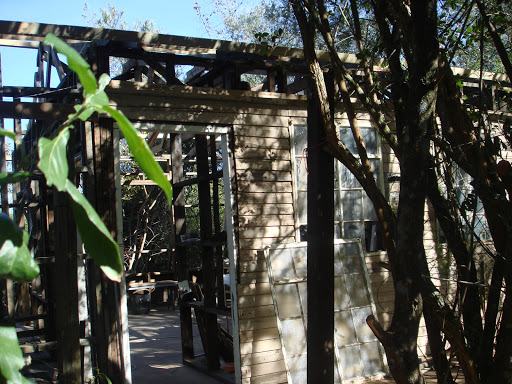
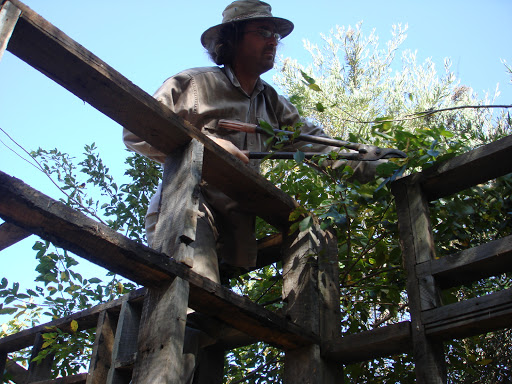
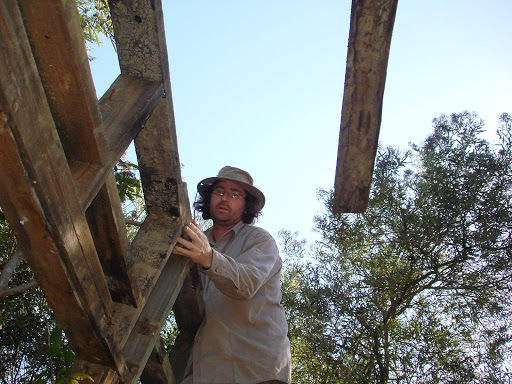
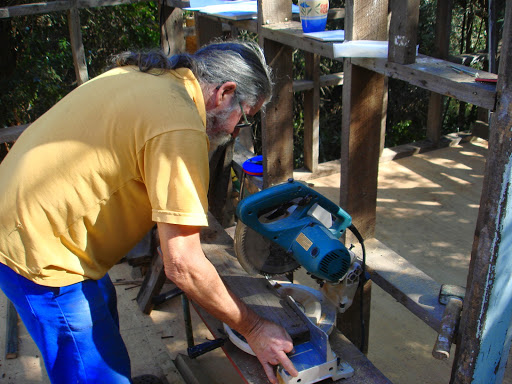
You see,.. my semi- retired father and I are building a wooden cottage in the Outeniqua indigenous forest. It is a very modest cottage built for family needs; rectangular in plan, with a double pitch corrugated iron roof. When I say we are building the house I don’t mean it as a metaphor for designing and drawing plans for, or a metaphor for sitting around watching the contractor’s progress. No; I mean we are physically, digging, measuring, cutting and fitting (and sometimes knocking down) 


It has been great on two significant levels. Let me list them:

Firstly: 

When physically building you are compelled to focus on one task. You are compelled to be present. Not to think about the next meeting or the previous phone call. How often do we get a chance to be focussed on the present? Especially those of us in management positions can lead a very fragmented and frantic existence. Many of us have powerful and creative minds but have created a reality for ourselves where we spread our input (and out impact) so thin as not to add the value that we could.

Secondly:

Building in the forest has helped me see the potential of my own hands and energy. I can actually build a house. WOW!
The real truth is that Murray and Roberts could probably build it a little neater. (OK,… a lot neater.) But it is not a competition. We are building the house because that is what we need to do to meet our needs and aspirations right now. We are not building the house to try to compete with Murray and Roberts! But what I am talking about here is something more widespread! A phenomenon that spreads across our lives and effectively limits what we believe we are able to do. We are intimidated by the corporate and media dominated world through which we move every day. We slowly begin to believe that we are not good enough to take action.

We cannot sing as well as Mariah Carey, so we will never dare to sing at a family dinner or in the pub.

We cannot tell stories as well as Stephen King, so why even bother trying.

Mom cannot make clothes as neatly as Edgars, so we’ll rather stay at home than be seen dressed in her homemade tracksuits.

We cannot build as well as Murray and Roberts, so lets not let people laugh at our crooked house!

The net result is that we become intimidated into inaction allowing big corporate and media giants to do for us what we used to do for ourselves, and it only takes a little time before we have lost our skills and our dignity forever.

I have in the forest found the joy and freedom of taking back that which I thought I had been robbed of. Cutting planks, laying boards, nailing trusses.

There is magic in that!


“Fullness of Health”, for me, my family and for the Land.

I am quite sure I have more people popping in to the farm over the weekend “just driving past” that I have at my house in Walmer. I think its fantastic. I think its curious. Its definitely something about the rural setting that reminds us about being civilised, about being friendly, about being helpful, about being neighbourly. This interests me.

I spent this morning with the chainsaw again. This time working along the stream, from the dam wall toward the Oak tree. Most of what I was cutting though was Ink Berry. I cuts very easily. The Idea is to cut a path so that I can run the temporary electric fence through as I have done elsewhere. Slowly, slowly, I am beginning to make the land accessible. Beginning to make it manageable, beginning to put myself into a position where I am able to help the land achieve the “fullness of it health”.

I have set myself the objective of achieving the “fullest possible health” for this land. What does that even mean? Perhaps my objective for the land is the same as my objective for me and for my family. The fullest possible personal health. The fullest possible family health. “Health” is the correct term to use when setting an “Holistic Goal” for the land (as Alan Savory would suggest we do). “Health” instead of efficiency, or productivity, instead of profitability. “Health” because the land is a living system. It’s an organism, really, and if it healthy it is much more likely to be to us, efficient, profitable and productive.

I did some work on the dam yesterday. Introducing a “collar”
I have posted a video here:

The basic idea is to draw the water into the overflow from a little bit below the surface so as not to drain the dam of its most oxegenated, warmed water. (or its duckweed) This simple device will make the dam healthier!