The End of Excellence?

(This Piece first appeared in The Herald on 25 July 2014 and is based on a talk I gave at the Athenaeum that week)

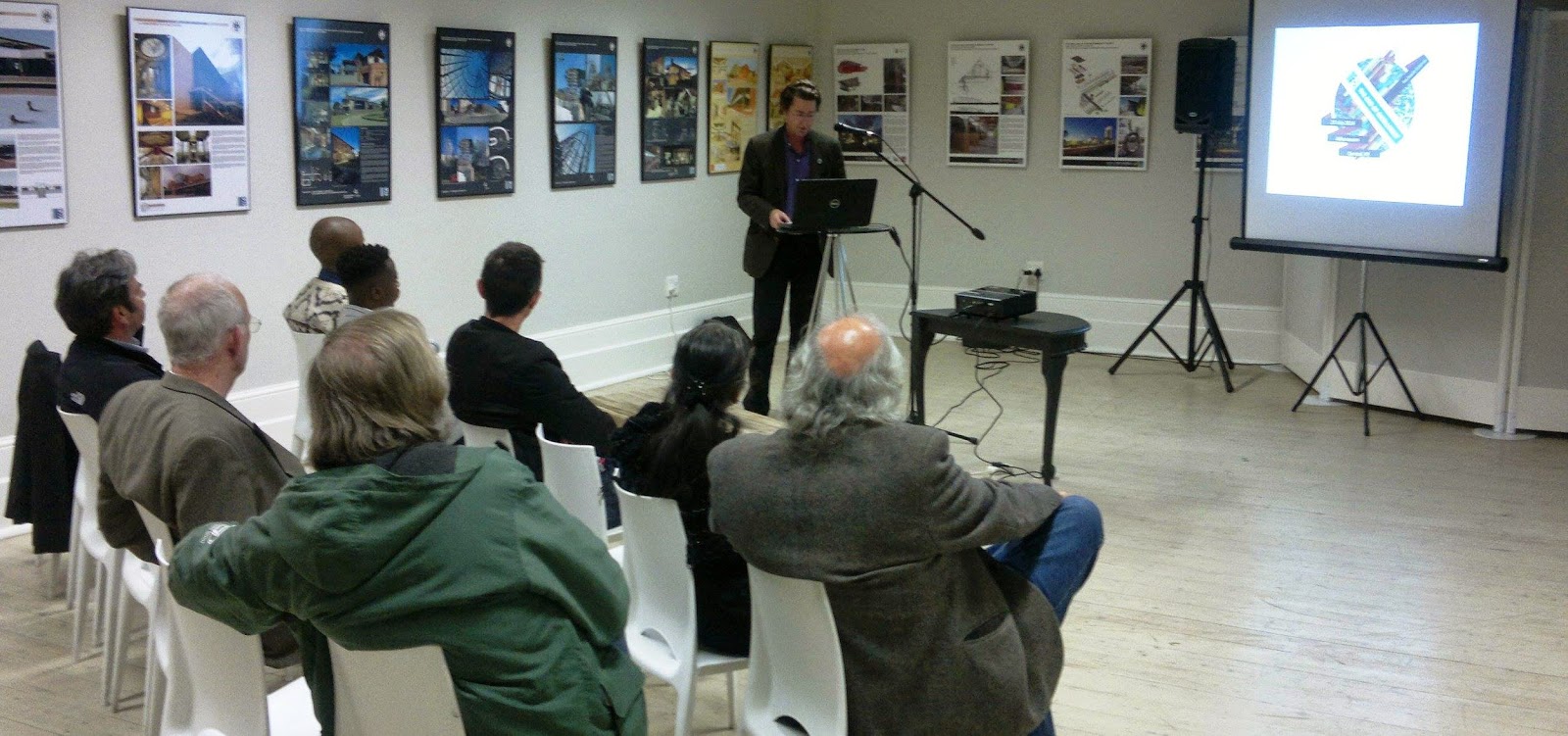
I have never visited Paris, but I have, just last night, visited a fantastic exhibition of excellent buildings and spaces at the grand old Athenaeum, in Central Port Elizabeth, entitled; “100% Paris”. You can still catch it. It runs until 25 July 2014. The exhibition is part of a collaborative between the Alliance Francaise, The ECIA, the NMMU School of Architecture and the MBDA. The ECIA’s Regional Awards programme is on Exhibition and so is some very interesting work by the MBDA and NMMU on the Baakens River Valley.


Visiting exhibitions and events of this sort always gets me thinking and this time was no exception. I gave a small talk on behalf of the ECIA and there was some very stimulating discussion that followed. The event got me thinking about “Excellence” and especially excellence in the built environment. What is it? What is its purpose? Has its time passed? Is excellence and means to an end? Or is excellence an end in itself? It got me thinking about “The End of Excellence”.

Because, as I said at the talk last night, I am quite sure, if you were to ask anyone who ever visited, Paris, or London or any other beautiful city, to speak of what was most memorable of their visit, they would speak of the built environment. They would speak of the bridges, the steeples and the spires. They would speak of the parks, the walkways and the avenues.

I am pretty confident, that after having returned from London or Paris,  you would not speak of how neatly the accountants prepare their balance sheets, or with what precision the doctors sew up their stitches after an appendectomy.  Yes, of course these disciplines are indispensable to our civilisation, but we must confront the truth that there is something very significant and lasting about the impression that the built environment makes on us.
So, what about Port Elizabeth? Yes, we have some beautiful places. We have the Donkin Memorial, City Hall and Feather Market Centre. We have an extraordinary collection of buildings, parks and spaces in Central. There are some parts of our city that are truly excellent, but  many of these are all very old buildings and places.  So, I ask: are we still able to create excellent spaces? Or, have we moved into and era beyond “ The End of Excellence”?

I ask this because, excellence is under threat. Around the world it is being beaten up and kicked in the teeth. Excellence is being bludgeoned simultaneously by a gang of three thugs. I am not afraid to name them.


Thug number 1 – “Mediocrity”

“Mediocrity” is a politically correct thug. “Mediocrity” says that perusing excellence is unfair because then not everyone gets a chance. “Why should people that are un-talented, unmotivated and generally useless not also get a chance?”

Thug Number 2 – “Competition”

“Competition” is dressed like a respectable accountant, but still very much a thug. “Competition” says that “if it can’t be measured, it can’t be managed”.  “What makes Central better than Charlo? What makes the North End Stadium better than the Boet Erasmus? What makes Architect A, better than Architect B? Show me the calculation! Is it longer? Is it heavier? Does it have more light bulbs?”

Thug Number 3 – “Compliance”

“Compliance” is a mouse-like, lawyer-like, thug? Compliance says “excellence” what is this? Where in the rules does it say we have to create an excellent city? “Compliance” says, we have made rules designed for stopping corruption and thievery, “What more do you want?”.
The sad news is that these three thugs have taken over public and private sector property developers. The people that build our cities are now controlled by these thugs or have become their agents.  Where excellence still happens, it happens because of the super human efforts of isolated individuals in the public and private sectors, who, in spite of the odds being stacked against them, see to the delivery of excellent buildings and spaces. Even today. Even in our city.


 The private sector routinely deliver s mediocre buildings and spaces because it appeals only to the mediocre tastes and expectations of you and I, the people who frequent their mindless malls, rent spaces in their sterile office parks. The public sector routinely delivers a mediocre built environment, for the same reason as the public sector, but they but they are also absolutely determined to see the each and every individual participant in the long sequence of events that leads up to anything getting built, is equally as mediocre, “So that everyone can get a chance.”
The private sector explains that it has no choice, it must remain competitive. It explains that the stock market will punish it if it were to waste money on creating an excellent built environment. “So as long as our competitors can get away with building poor environments, then so will we.” The Public sector, explains that “We are dealing with tax payer’s money here. There must be competition, to show that we paid bottom dollar.”
The private sector says to the public. “I have done everything you have asked of me. I have got the EIA, the TIA and the HIA. I am exhausted. I have complied. Where does it say I have to develop excellent buildings?”  The public sector says pretty much the same, but is even more exhausted by the complex internal compliance procedures required to so much as move a pencil from one desk to another. There really is no time and energy left to champion such niceties as “excellence”.
Yes, it is sad. Yes, it is demoralising. But it is the brutal truth. Excellence everywhere is under attack and none so more as in the built environment. But, I ask:  Is it the End of Excellence?
My attempt is to convince you that it is not the end. Yes, we are under attack from these three mindless thugs. Yes we are bleeding. But there are things we can do. 

And while there are still things that can be done, it cannot be the end.

“Fullness of Health”, for me, my family and for the Land.

I am quite sure I have more people popping in to the farm over the weekend “just driving past” that I have at my house in Walmer. I think its fantastic. I think its curious. Its definitely something about the rural setting that reminds us about being civilised, about being friendly, about being helpful, about being neighbourly. This interests me.

I spent this morning with the chainsaw again. This time working along the stream, from the dam wall toward the Oak tree. Most of what I was cutting though was Ink Berry. I cuts very easily. The Idea is to cut a path so that I can run the temporary electric fence through as I have done elsewhere. Slowly, slowly, I am beginning to make the land accessible. Beginning to make it manageable, beginning to put myself into a position where I am able to help the land achieve the “fullness of it health”.

I have set myself the objective of achieving the “fullest possible health” for this land. What does that even mean? Perhaps my objective for the land is the same as my objective for me and for my family. The fullest possible personal health. The fullest possible family health. “Health” is the correct term to use when setting an “Holistic Goal” for the land (as Alan Savory would suggest we do). “Health” instead of efficiency, or productivity, instead of profitability. “Health” because the land is a living system. It’s an organism, really, and if it healthy it is much more likely to be to us, efficient, profitable and productive.

I did some work on the dam yesterday. Introducing a “collar”
I have posted a video here:

The basic idea is to draw the water into the overflow from a little bit below the surface so as not to drain the dam of its most oxegenated, warmed water. (or its duckweed) This simple device will make the dam healthier!

Time to knuckle down to work and have a braai

(This column first appeared in the Weekend Post n 24 May 2014

I was planning to write this column on Workers Day, but I was too busy working. Make no mistake, I took the public holiday. Like everybody else, I was out of the office, but I was physically working with my gumboots and my chainsaw, clearing alien vegetation that has come to clog up the dam and the stream. Call me crazy, but I love to do physical work. I love the feeling of using my muscles, my arms and my legs. I love the rhythm of thinking and doing. I love the feeling of physical exhaustion in the evening.  I love the supper time retelling of the achievements of the day and I Iove the deep satisfied sleep that follows it. It seems strange to me therefore, that I have put so much time and effort in my life to ensure that I don’t have to do any physical work at all. My twelve years of schooling in maths, literature, history and science required no “doing”, no lifting or pushing. It did though; prepare me for another five years of study at University which would eventually deliver to me the degrees I required to become an Architect and be guaranteed of never having to push a wheel barrow, thrust a spade into the ground or cut firewood.
On leaving University, life as a young professional was clear, nobody ever handed out a rulebook, but the understanding was that we must put in time at the office to earn our money, but if we put in too much time we will break down, so we must take some of that money to buy “leisure”. That leisure must not involve doing anything productive or meaningful.  We may choose from a vast array on mindless sporting or cultural pursuits. We may participate or spectate. If the mindlessness of the leisure becomes unbearable, we may numb ourselves with alcohol, sugar or nicotine. This is just how it is.
I can see how in the headlong rush to get to the ‘top of my game” I have moved further and further in my career, away from actually doing any work. Like lifting a pencil, to sketch a chimney detail or calculating the fall and cover of a drainage installation. All of that is “outsourced”, because that is the law of competition and the law of competition says that, if I am an expert at running an architectural practice, I can’t be “wasting” my time actually being an Architect. I must spend my time delegating , checking what others have done, motivating, admonishing, fighting with debtors, apologising to creditors because that’s what we do when we get to the top of our game.
Does any of this ring true for you in your life? Perhaps, what each of us needs to do is sit back and look at the route we have walked to get where we are in our careers. Each of us needs to get down and do the dirty work of thinking through how we have been conditioned to look down on anyone doing physical work. Even in our homes, when we can’t resist the instinct to get our hands in the soil that we are married to, we make every attempt to dress up our gardening activities as “leisure”. We call gardening a “hobby”; we don’t call it “work”. When we can absolutely not resist the instinct to grow fruit and vegetables, a productive pursuit, we hide these away in the back yard.
So, what I am doing in my life about my dysfunctional relationship with work? I suppose, I am slowly beginning to participate, wherever I can, in actually doing stuff. I am also looking for family traditions and practices that involve real work, even if it just taking the time to cook the mother’s day meal.  Some families in our region are fortunate to belong to a tradition where work is still honoured. If you drive through the streets of New Brighton or NU 7, on any given Saturday you will find clan groups participating in “Imisibenzi” (literally translated as “works”). These traditional functions mark a range of special occasions, but what is interesting, is that everybody attending the function, works. From the slaughtering of the beast, to the processing of the meat to the brewing of the beer and the peeling of the carrots. Hosts and guests work together. Honouring tradition and honouring the idea of work and how it is in fact not separate from leisure. To a lesser degree, but not entirely dissimilar, on any given Sunday in the suburban backyards of Summerstrand and Sherwood we find  family groups around the braai, spicing the meat, turning it on the flames. The hosts and the guests working together, some in the kitchen with the potato salad and toasted sandwiches and others outside with the chops and the wors. These are important traditions to hold onto, where the tendency is toward the American situation where 43% of all meals are no longer prepared at home and where work is generally regarded as something you sell in exchange for cash.
So more and more I come to see that any activity that helps me understand that work is not separate from leisure and that work is more than just a commodity for sale, is where I want to be spending my time.
In fact, I think I am going to braai tonight. It’s the least I can do!

Look after what we have got.

(I wrote this Column for the 9 April 2014 edition of Port Elizabeth’s daily newspaper, “THE HERALD”)
It was a windy, wet Wednesday. The sound of the angry sea crashing over the rocks was not even audible over the noise of the lone excavator as it crushed and smashed the last remains of what was the Seaview Hotel. Like a deranged beast, like an angry elephant, swinging left and right with its devastating mechanical trunk. The once gracious and manicured Minhetti was no more.
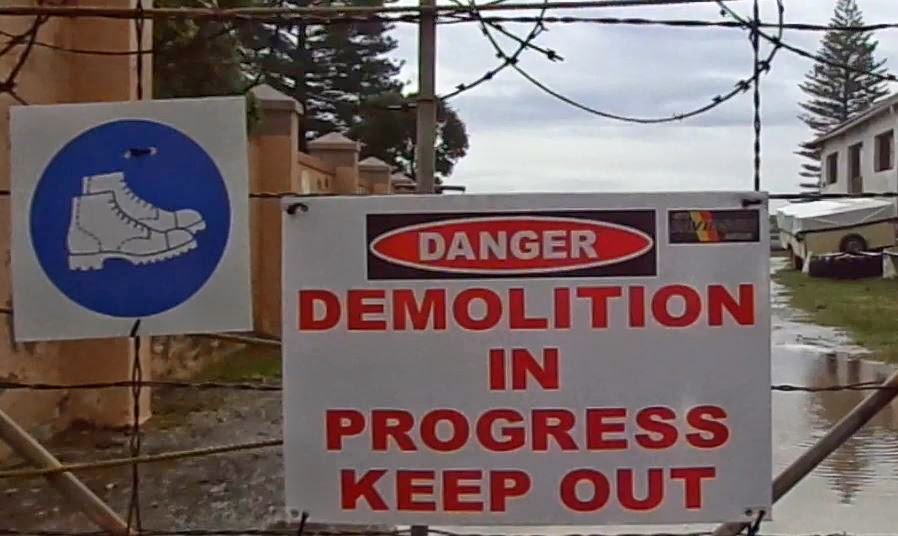
My son sat in the car, dry from the rain, as I stood by the gate, by the sign “Dangerous – Demolition in Progress”. I was not sad nor sentimental, not angry nor frustrated. I did not really even like the Seaview Hotel all that much the once or twice that I had been there. But I was filled with and uneasiness that stirred somewhere deep inside my innards. Over the course of my short life I have not yet been able to figure out what these deep feelings of uneasiness mean, or even whether they are of any significance. I have learned though, that it is normally I sign that I should step back and ponder. So here I sit, this morning, pondering over a fine Cappuccino in an average mall café.
I ponder over how we commit large amounts of energy into showing how frustrated “we” are that “they” demolished “our” hotel, or made potholes in “our” roads. Or how “they” built Greenacres, killing “our” beloved, historical Main Street. We know that it is too late, but still we commit the energy to raise our voice. Like the English complaining about the weather. Is this not a form of insanity? (Knowing nothing can come of our whinging, yet whinging anyhow!) But then I ask myself: ”If it is too late to save the Seaview Hotel, then what is it not too late for?”
I am sure each and every one of us has a best building or favourite neighbourhood, about which we are sentimental. But not each of us has a newspaper column in which to talk about it!
I do.
So, without any shame, I tell you: “Now is the time to take action to save Central, Port Elizabeth.” Framed by Govan Mbeki Avenue, the Baakens Valley, Rink Street and Russell Road, Central is home to the most extraordinary collection of rich and poor, young and old, sinner and saint. All framed in beautiful avenues, delightful squares, quaint lanes and irreplaceable buildings. How long will those of us that find meaning in Central wait before we find the energy to stand up, make a noise and take action? Will we wait for the last heritage cottage to be burned by damp and freezing vagrants? Will we wait for the last antique shop to flee to Walmer? Will we wait for the last coffee shop to tire of hastily hosing vagrant urine of its veranda every morning before the first customers arrive? Will we wait for the last office dweller to driven to Newton Park by the grime, dirt and continuous harassment by street people, drug dealers and petty thieves? When the last housewife, loses her last child in the hip high grass in any number of once perfect parks and playgrounds? Will it be after the bulldozers come, to clear the land, to flatten the monuments? Will it be then that we say “But how could “they” do this to “us”? How can “they” rob “us” of this enduring example of how city living can be tolerable, bearable and even enriching. How can “they” rob “us” of this model of authentic living that was our only contribution to the country’s emerging thinking on the future of the city?
I am sorry my friends, but I must offer to you that we are all delusional. Sadly we have come under the spell of a compelling lie, a myth that there exists such a thing as an “us” and a “them”. We can understand why the politically powerful may find it useful to perpetuate this myth, but it serves no purpose when we are needing to get things done. Right now, the thing that I am motivating, needs to get done, is that we save Central. If you are with me, then let us agree on one action we can take right now, as you put down this newspaper. Go find out more about the excellent initiative underway right now to establish a Special Rating Area (SRA) for Central (basically you pay a bit more rates to get better cleansing, security maintenance etc.)  It’s a “no brainer. SRA’s have been set up all over South Africa and the world.  Jo’burg’s got them. Richmond Hill has just set up an SRA, proving it can be done in our region.
If you do not live, work or invest in Central, all is not lost. Make a point of having a coffee in Parliament Street once a week. Make a point of buying an antique in Lawrence Street once a month, make a point of taking your kids to the Donkin Reserve once a term, make a point on attending a church service once a year in any one of the most beautiful Gothic revival churches. The point I make is, that our energy can be much better spent by expending it before the demolition than after the demolition.
Now that you are clear about what needs to be done: get out and do it! (Please)