
Specialization is for Insects.

I have a great deal of respect for the intelligence, tenacity and staying power that it takes to become a specialist in any given subject. The Architectural profession is no different to other professions in that our members come out of the university system that for a whole number of very good and practical reasons is dominated and lead by “hyper specialists”. Because of course to rise to the ranks of leadership of any respectable university a Phd is the absolute minimum requirement. In order to obtain this honor and this status you are required to contribute to the creation of “new knowledge” and on order to do that, your thesis better be pretty dam specific and specialized otherwise the knowledge cannot be counted by those dishing out Phd’s as being “new”.

The problem though is that in order to survive in the real world, it has for long been know that to become a “one trick pony” is a specifically risky endeavor. We all know the countless stories of the fifty something highly specialized bank employee and specialist in a very specific method of finance or administrative process who is unceremoniously retrenched and finds that he falls all the way to the bottom of the social and economic pile and ends up waiting tables at the Spur! Yet still entry into our professions is controlled and guided by those that have an unavoidable bias toward the kind of mind that tends toward specialization.

Specialization is a trap. It is a curse. Specialization is for insects.!! To be fully human and express what it is to be human requires you to be flexible, knowledgeable in many fields and to not be intimidated by novelty or change or the requirement to join dots that you have not previously joined.

This has been true for the longest time but is become more and more obvious as we enter into an era where it has become increasingly difficult to compete with constantly improving AI experts and specialists. I am not a prophet and thus have great difficulty seeing the future, but my guess is that the coming years belongs to those that can bring together experts and players (AI and human) from many disciplines and many fields in such a way as to respond efficiently to a need in the market.

And to my Architect friends I say – You are all very well placed to position yourself in this time, but (and a very important but) is that you have to take the courage to step up and to lead. Are you ready for this?
Addressing the Shortage of Student Accommodation

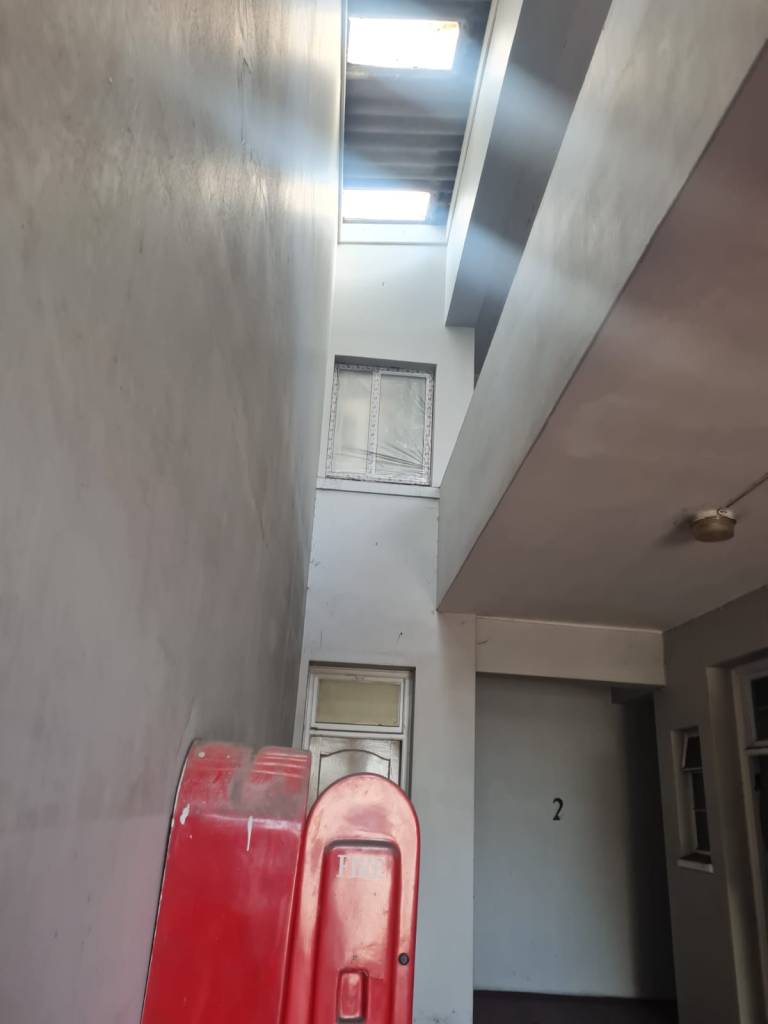
Disused inner city buildings can often be re-purposed for students

Nelson Mandela Bay is not dissimilar to most large cities in South Africa where there is a significant shortage of student accommodation. There are a number of reasons why this is the case, but I will not dwell on that right now. Rather I would like to just speak about the “Headlines” of what you as a property owner may want to give some thought to in order to help you decide whether you would like to invest in being a part of solving this problem.

The first thing to check would be if your property is adequately accessible to a University or other place of Higher Learning. Institutions of higher learning will very often make public criteria for what they would use to decide whether or not to accredit your accommodation. Proximity to campus or to a shuttle route would very often form part of these criteria.

Once you have found that your property is adequately located, I would advise that you take a look at the Zoning for your property. In Nelson Mandela Bay this information can be requested from the NMBM info center. The uses permitted on your property are defined in the NMBM Zoning Scheme, which can also be obtained from the NMBM.

(Other cities will have similar documents and similar processes – but each place is slightly different.)

By interpreting the zoning scheme you will know how many students (if any) you are permitted to accommodate and what procedures you would need to follow should you want to accommodate more that what you are currently permitted. The objective though is to get municipally approved plans for what it is that you proposed to build and then use those in order to get accredited by the higher learning institution or by NSFAS who provides funding for some students.

Each of the steps above can of course have an entire book written about them (and we have not yet even got to construction!). My aim though is to just get you thinking of the possibility they there is very often a good investment to me made while offering a desperately needed service. As we speak many, many students are accommodated in very poor conditions, because thats all there is. Every quality room therefore that you can provide gives a student the chance to make a success of there studies and perhaps turn around their lives and even the lives of an entire family forever.

Think about it!

“Each One Teach One”

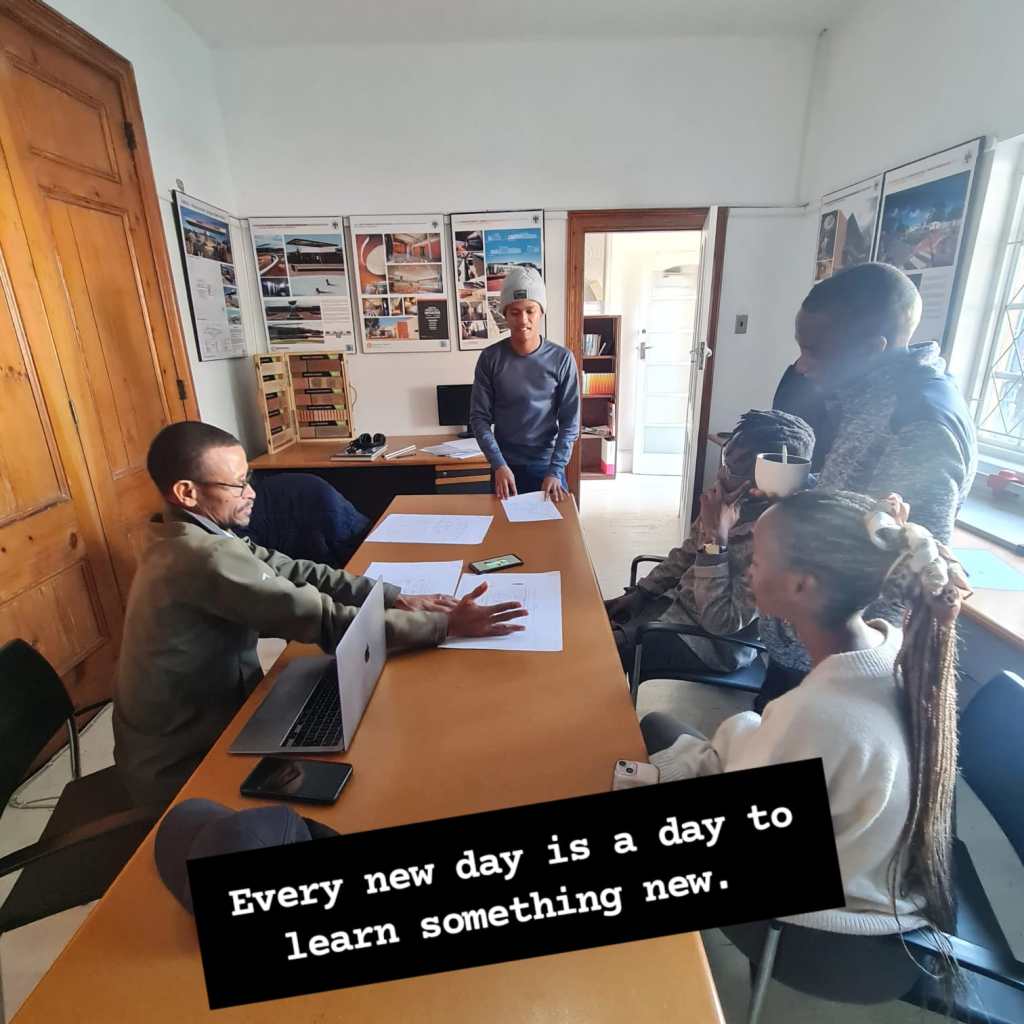
There is of course a time and a place for formal training and education. What I love to see in the office though is when one of us shares what we know with another. I’ve noticed that this tends to happen when the office culture is “right”. You may ask me what I mean by “right”. Well I don’t really know, but I do recognize it when I see it. I also see when the culture is not right ; when people who know stuff hold onto it because they are trying to compete or trying to be better than the next one. I also notice in some workplaces where those who have entered more recently are made to feel very junior and become hesitant to share what they know.

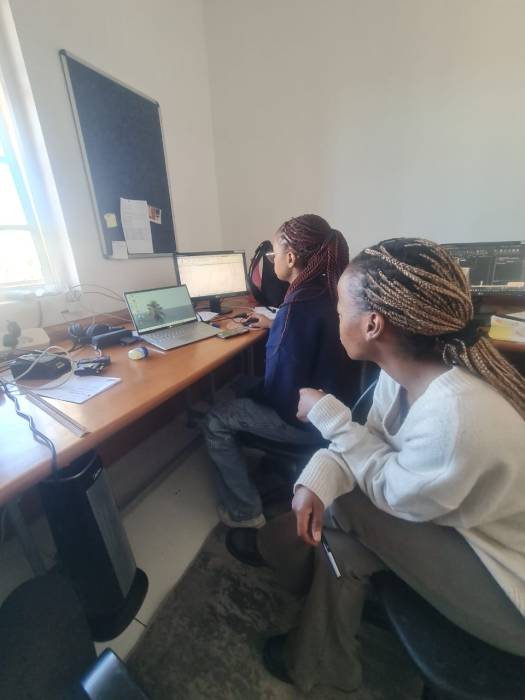
Teaching and Learning on any random Tuesday.

It is true that in an Architects office, the older members hold a lot of wisdom and learning from years of being hit over the head by the ravages of the economy in general and the construction industry in particular. But it is also true that younger team members often bring a contribution that comes our of a fresh perspective or out of a better understanding of and familiarity with the fast changing technologies that Architects employ in their attempt to assist their clients to get buildings and spaces to emerge from the world of dreams into the physical realm.

The point though, is that if you are running an Architectural practice, or perhaps any small business, your job includes thousands of things – but one of these things is to build a culture where each of the team members has the courage to teach and the humility to learn. (regardless of their of any position within the hierarchy)

If you forget that this too is your job, then you are setting yourself up for inevitable failure.

Just letting you know!!!