I have a great deal of respect for the intelligence, tenacity and staying power that it takes to become a specialist in any given subject. The Architectural profession is no different to other professions in that our members come out of the university system that for a whole number of very good and practical reasons is dominated and lead by “hyper specialists”. Because of course to rise to the ranks of leadership of any respectable university a Phd is the absolute minimum requirement. In order to obtain this honor and this status you are required to contribute to the creation of “new knowledge” and on order to do that, your thesis better be pretty dam specific and specialized otherwise the knowledge cannot be counted by those dishing out Phd’s as being “new”.
The problem though is that in order to survive in the real world, it has for long been know that to become a “one trick pony” is a specifically risky endeavor. We all know the countless stories of the fifty something highly specialized bank employee and specialist in a very specific method of finance or administrative process who is unceremoniously retrenched and finds that he falls all the way to the bottom of the social and economic pile and ends up waiting tables at the Spur! Yet still entry into our professions is controlled and guided by those that have an unavoidable bias toward the kind of mind that tends toward specialization.
Specialization is a trap. It is a curse. Specialization is for insects.!! To be fully human and express what it is to be human requires you to be flexible, knowledgeable in many fields and to not be intimidated by novelty or change or the requirement to join dots that you have not previously joined.
This has been true for the longest time but is become more and more obvious as we enter into an era where it has become increasingly difficult to compete with constantly improving AI experts and specialists. I am not a prophet and thus have great difficulty seeing the future, but my guess is that the coming years belongs to those that can bring together experts and players (AI and human) from many disciplines and many fields in such a way as to respond efficiently to a need in the market.
And to my Architect friends I say – You are all very well placed to position yourself in this time, but (and a very important but) is that you have to take the courage to step up and to lead. Are you ready for this?
This piece first appeared in The Herald on 12 January 2017
December holidays in South Africa, perhaps more than anywhere else in the world, are a glorious celebration of idleness; an annual reminder to all of us that there is so much more to this life than working for a boss.
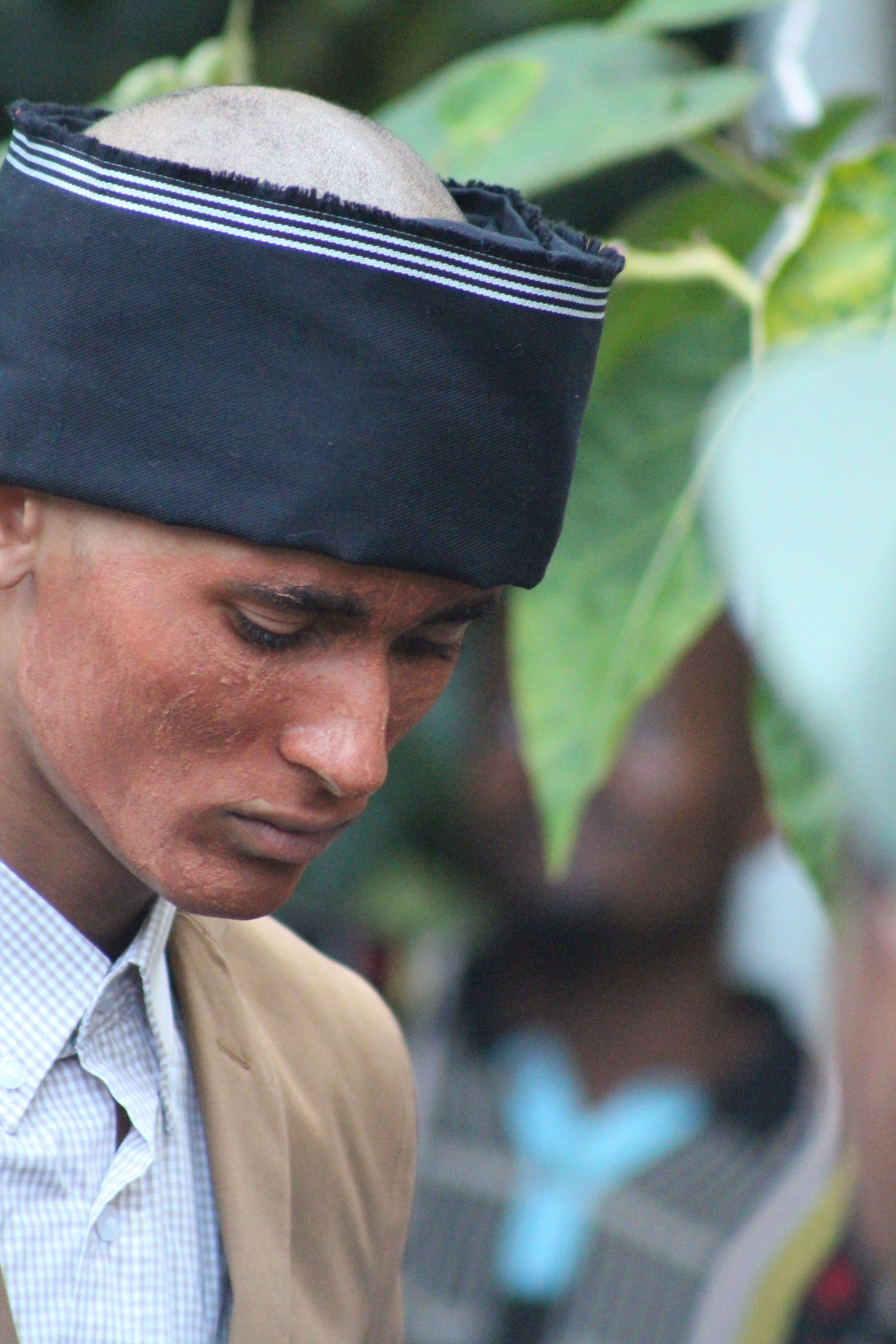
The young man returning from the bush dresses in a certain way (Photo: Tamarisk Glogauer)
But, other than idleness, December in our region is also dominated by significant “cultural” and “traditional” obsessions. In my family, we follow both Xhosa and European traditions, so December means Mgidi season and Christmas season. This year was particularly intense as my second son (recently matriculated) went to the bush to participate in the thousand year old Xhosa tradition of circumcising boys and initiating them into manhood. So, this December was not just about attending the various celebrations as a guest, but rather hosting a huge feast (called an Mgidi) in my back yard in Walmer.
Of course, once everything was done with the Mgidi, the marquee taken down, the last of the ox eaten and the last Mqomboti drunk, I quickly got into Father Christmas mode and rushed off to the mall to get the gifts, the turkey, the gammon, the crackers and all the other paraphernalia that is absolutely required to make Christmas a success. It all worked out well and so many of our friends are patting us on the back for being “multi-cultural” and for “promoting diversity”.
But I have been thinking about this a little over the holidays, as the fog of burnout begins slowly to loosen its grip on my brain. I really don’t want to make myself unpopular, but I am just no longer sure that all of this talk of “embrace your culture” and “be proud of your roots” is going to be good for us in trying to build a society and a culture that attempts to pull together in the same direction. The thing is that your family traditions (be they Diwali, Imisibenzi or Christmas) are very, very useful tools at making you feel part of “the group”. There are so many little rules in these cultural events that we all “just know”. Those of us that celebrate Christmas know that Father Christmas comes down the chimney, not through the front door; we know that gifts must be wrapped and shiny paper and must be given on 25 December. We know that the Christmas dinner must include a turkey and that it is absolutely essential that you wear one of those flimsy paper hats while you eat.
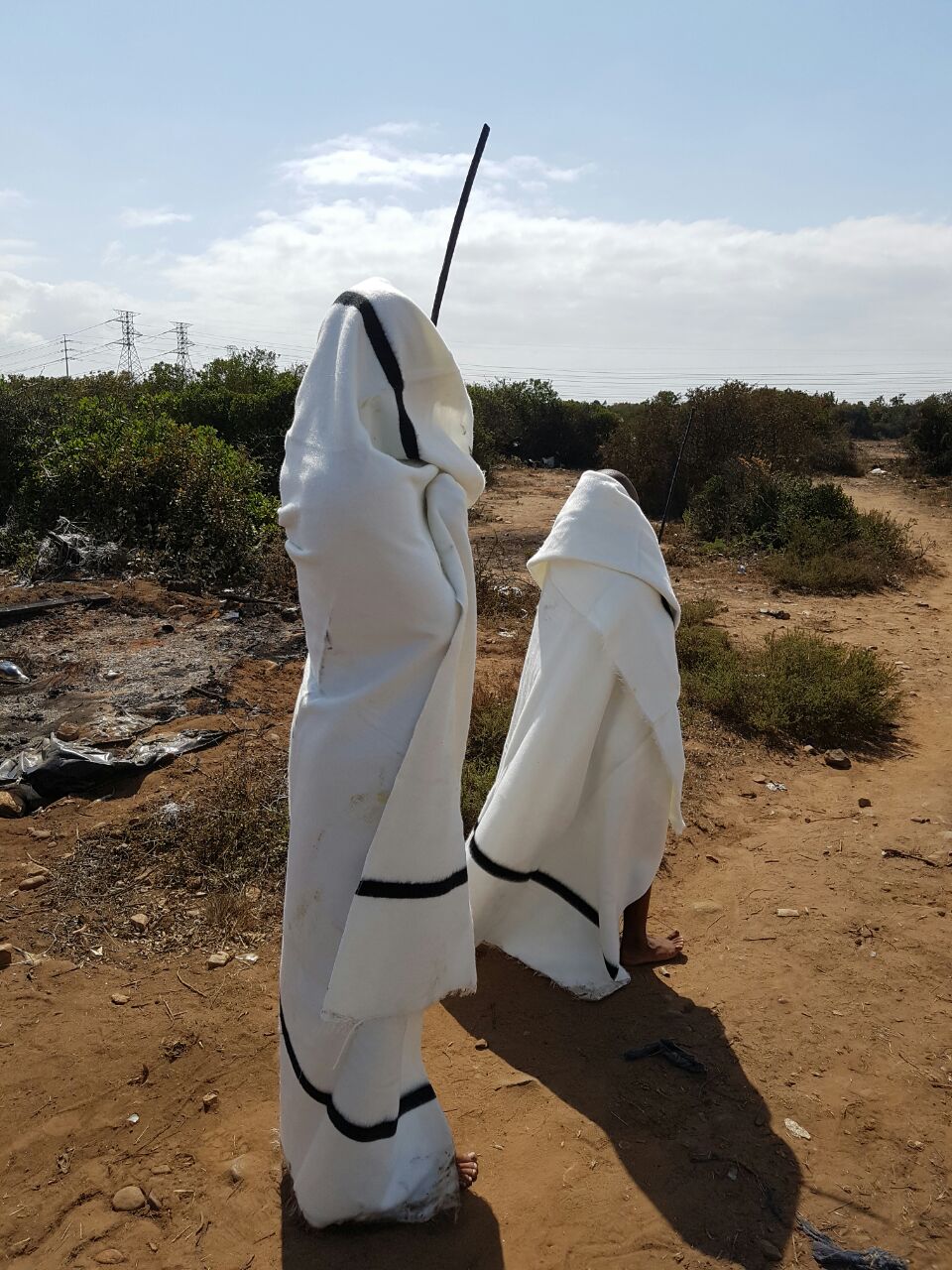
Clad in brand new white blanket the young man turns his back on his childhood and heads home – Phot0: Andrew Hewitt-Coleman
Those of us that attend Mgidis “just know” that the young man will come home from the bush in the morning to the loud bashing and clanging of pots. We know that he must be adorned in a clean white blanket and must carry a blackened stick. We know that he will be smeared in red clay by his sister and given a new name. Knowing all these rules and sub-rules makes us feel comfortable, makes us feel part of something larger than us.
But the truth is that cultural events like Christmas, Bar Mitzvahs or Mgidis originated at a time when everyone around us in any direction for a thousand kilometres spoke the same language and held the same beliefs. Cultural events were therefore a comforting and regular reminder that we are all on the same page. The reality of course is that we don’t live in that world any more. So, my fear is that the very same cultural events that evolved all over the world to make communities stronger are now having the opposite effect in an age of multiple overlapping Diasporas. What we call “culture” has the very real effect of making someone who does not know all the little rules feel like an outsider and in a very real way, unwelcome.
I may have lived next door to Greek neighbours for ten years but would still feel like I don’t belong at a birthday party where there is bearded guy dancing in circles while his mates chuck the crockery on the floor.
Otherwise intelligent friends of mine speak about South Africa being a cultural “melting pot”, where the (completely unscientific) belief is that if each family just keeps on following the same routines that our great-great grandparents did, that we will somehow magically develop a new culture and tradition that is uniquely South African. I’m sorry, but I just don’t see it. What I see from where I am standing is arrogant conservative backlash that says “this is how we have always done things and to hell with all of you!” I know that Trump supporters and Brexit people may tell you otherwise, but this mind-set can only be a recipe for extinction.
The temporary structure the boy stayed in is burned to the ground along with all boyhood possessions – Photo – Andrew Hewitt-Coleman
So what can we do? My suggestion is that we begin to discuss the challenge of culture, but not from the perspective of trying to conserve some dying detail, but rather from the perspective of “What aspect of my family’s tradition can I soften, explain or modify to make accessible to everyone? What can I do make it easier for those around me to understand and participate in?”
And another thing: Get over yourself! It’s just not that serious! These traditions are just a game that we play. Because deep down, in our quiet time, each of us know that we are so much more than the language we speak or the village we come from.


 noh ARCHITECTS