
One of the most pressing challenges facing South African cities — now and for the foreseeable future — is the provision of affordable housing. We have programs for the poorest of the poor through the RDP housing scheme, and we have private sector developers building for those who earn a salary. But in between sits a significant gap, and it is this gap that social housing exists to fill.
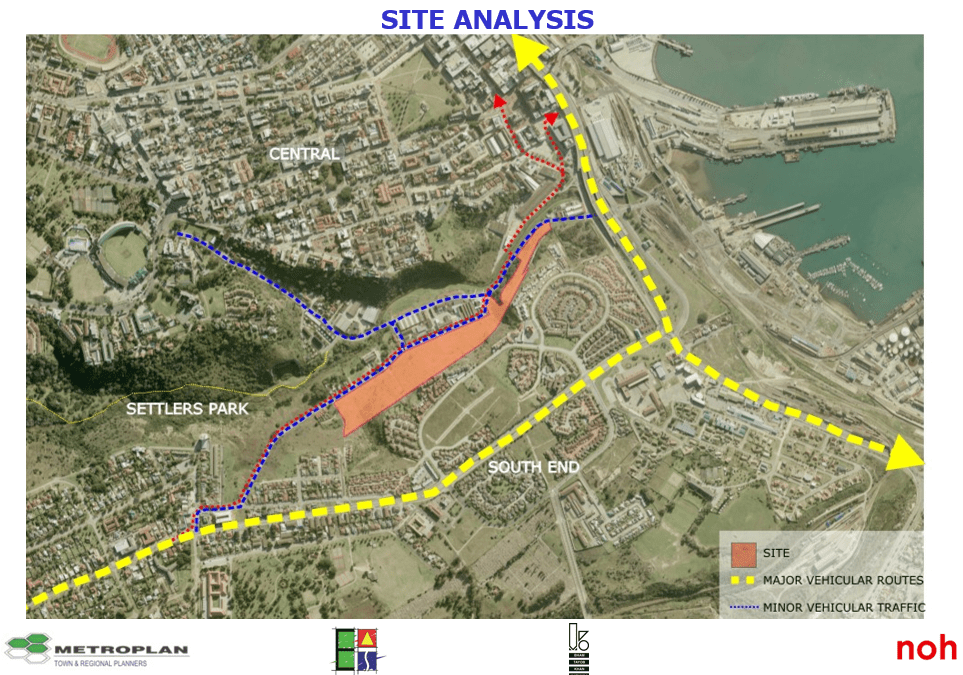
At noh Architects, we have been working on exactly this kind of project in the inner city of Nelson Mandela Bay, in the historic South End precinct. The work began as part of a larger urban design commission — a Spatial Strategic Infrastructure Framework (SSIF) for the Mandela Bay Development Agency — in collaboration with GAPP Urban Design from Johannesburg, with town planners Metroplan, environmental engineers EAS, and quantity surveyors BTKM. Out of that broader study, a specific site emerged around the Baakens River in South End.
A Site With History
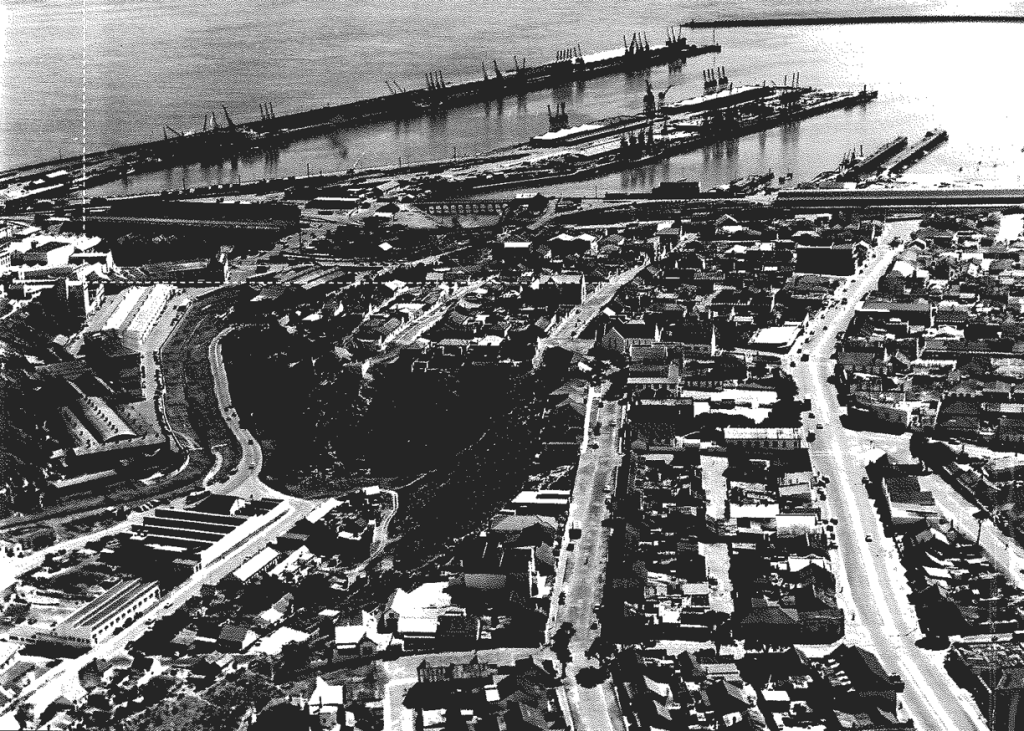
South End carries a heavy history. It was once a vibrant, mixed-race neighbourhood — Nelson Mandela Bay’s equivalent of Cape Town’s District Six — before forced removals in the early 1970s left vast swathes of land vacant. Much of that land remains undeveloped to this day. Walking past it, or driving past it, that emptiness is a quiet reminder of what was lost.
But emotions aside, the technical reality is that this is a well-located, developable site — and one of the best arguments for inner-city affordable housing you could ask for.
Demand-Driven Design
Good urban design doesn’t start with a grand vision. It starts with the facts: who owns the land, what the current land use rights are, what future rights are plausible, and critically, what the demand actually is. There is no value in an architect producing a beautiful urban design proposal that bears no relationship to what people can afford or what the city actually needs.
So our process involved a thorough affordability study — understanding income levels, benchmarking against existing social housing schemes, comparing public and private sector offerings, and designing unit types to match what residents can realistically pay.
Addressing the “Too Steep” Objection
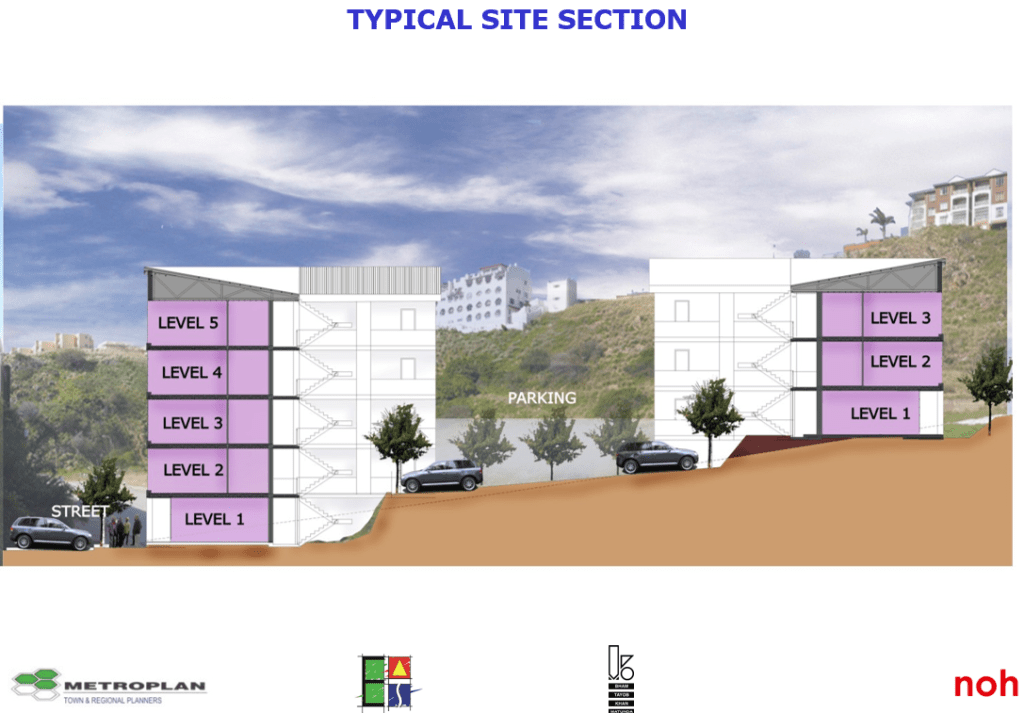
The site slopes. And yes, people drive past it and say it’s undevelopable. It’s too steep, they say.
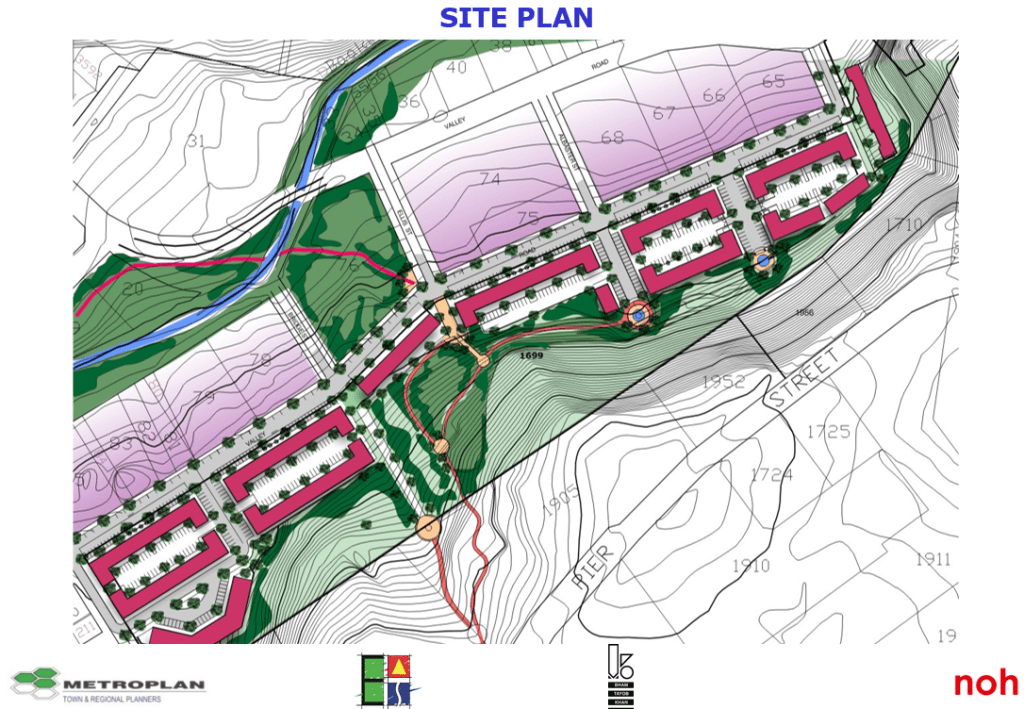
It isn’t. The historic photographs tell the story plainly: this land was fully developed before the demolitions. And it doesn’t take rocket science to see how it could be developed again. Cities all over the world have been built on slopes — Barcelona’s famous city blocks being one of the most celebrated examples. The solution is simply good design thinking: working with the topography, creating a repeating city block pattern, stepping the buildings in response to the gradient.
We do not need thousands of hectares of flat land to solve our housing problems. We need creativity, and we need to make better use of the small pockets of inner-city land that already exist.
The Case for Urban Location
Affordable housing is not just about buildings. It is about access — to jobs, to education, to public transport, to opportunities. Locating people who need employment 20 or 30 kilometres from economic activity is not a housing solution; it is a poverty trap. South End sits close to the city centre, well connected to the broader economic life of Nelson Mandela Bay. That proximity matters enormously.
Increasing residential density in well-located inner-city areas also strengthens the economic case for the city itself — more people, more activity, more viable public transport, more local commerce.
Scale: From the Door Swing to the City
This is the part of urban design that young architects especially need to internalise. The thinking required of you spans from how a door swings in a unit, to how a building sits on a block, to how an entire precinct integrates with the city’s bulk infrastructure and public transport network. Architecture and urban design are not separate disciplines — they are brothers. You cannot afford to be comfortable only at one end of the scale.
Where Things Stand
Regrettably, this project has not yet proceeded. The Mandela Bay Development Agency had its own ideas for the site, and the proposal was blocked. The land remains vacant. That is a real shame — the work is done, the feasibility is established, the design is ready. The button could still be pushed.
To colleagues at the MBDA: what happened? Why has a perfectly viable social housing project been stalled while the need for affordable housing in our city continues to grow?
This conversation needs to keep happening. We cannot design cities only for the wealthy, and we cannot limit our ambition to only the most extreme end of poverty. The gap in the middle is where a functioning city lives. It is where we need to build.
noh Architects is a Nelson Mandela Bay-based architecture practice with experience in urban design, social housing, and inner-city regeneration.

