
There are projects that stay with you. The Njoli Precinct Plan is one of them — a genuinely ambitious urban intervention that had the vision, the funding, and the thinking behind it, and yet never came to be.
Where It Began
The story starts in 2005, with a mayoral vision for the intersection of Njoli Road and Daku Road in Kwazakhele, Gqeberha. The original concept promoted by Mayor Faku was bold — almost theatrical — a giant dome anchoring one of the city’s busiest intersections. Over time, that idea evolved into something more grounded and arguably more powerful: a major intermodal transit node as part of what would become the IPTS, the Integrated Public Transport System.
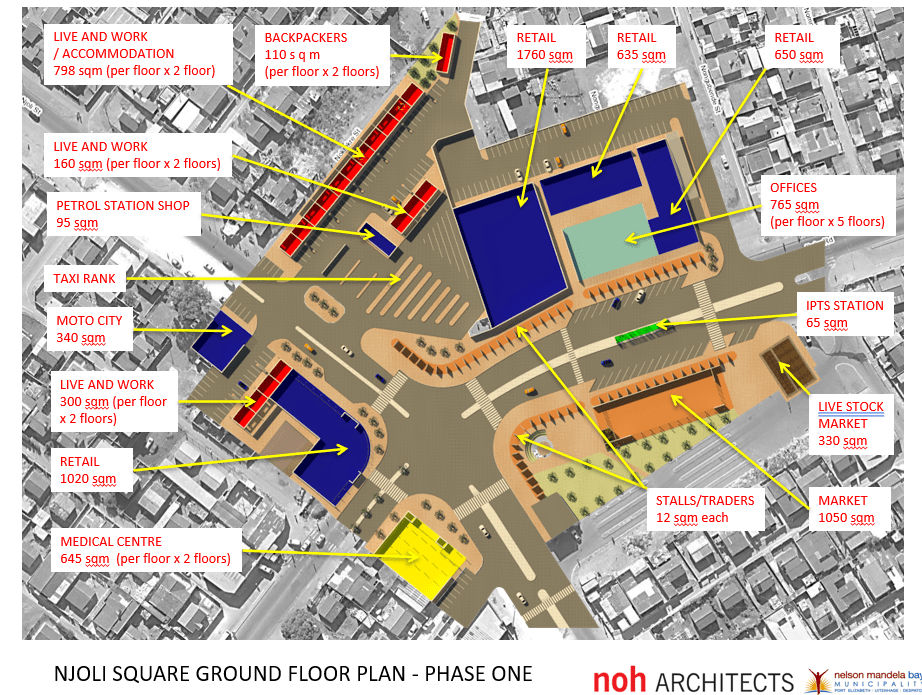
The location made obvious sense. This intersection is a natural convergence point — people travelling from New Brighton down Njoli Street, from Motherwell down Daku Road, and onward toward Kwamagxaki. It was already functioning as an informal transit hub; the plan was to formalise and amplify what was already happening organically.
The Vision Takes Shape
When funding was secured through the Neighbourhood Development Partnership Grant — R189 million from National Treasury — the concept was revisited and reconceptualised in earnest. Working closely with colleagues at Metroplan, particularly , the team moved away from the dome and toward something more urbane: a properly resolved four-way intersection surrounded by a mix of formal office and retail space designed to complement, not displace, the thriving informal trading already present at Njoli Square.
The design thinking was rigorous. The team engaged urban economists to model real market demand in the area. They consulted the taxi industry. They worked across all three tiers of government — national, provincial, and municipal — to understand what services each needed to deliver locally and what space that would require.
The resulting vision was genuinely mixed-use: IPTS infrastructure, formalised trader facilities, a library, an amphitheatre, civic support spaces, and — critically — national and provincial government office functions. The idea was to bring high-paying, formal employment back into a part of the city that apartheid planning had deliberately kept as a dormitory suburb, with no local economic base to speak of.
For Kwazakhele, this wasn’t just about transport. It was about economic justice.
Why It Didn’t Happen
With a compelling vision, substantial funding, multi-stakeholder buy-in, and detailed design work completed, the Njoli Precinct Plan had everything it needed to succeed.
It failed anyway.
The reason, in plain terms: poor political leadership. Not a funding gap. Not a design flaw. Not community resistance. Leadership failure at the point where decisions needed to be made and sustained.
That’s a hard thing to say, but it’s the honest analysis. And it’s worth saying clearly — because understanding why good projects fail is the only way to stop it happening again.
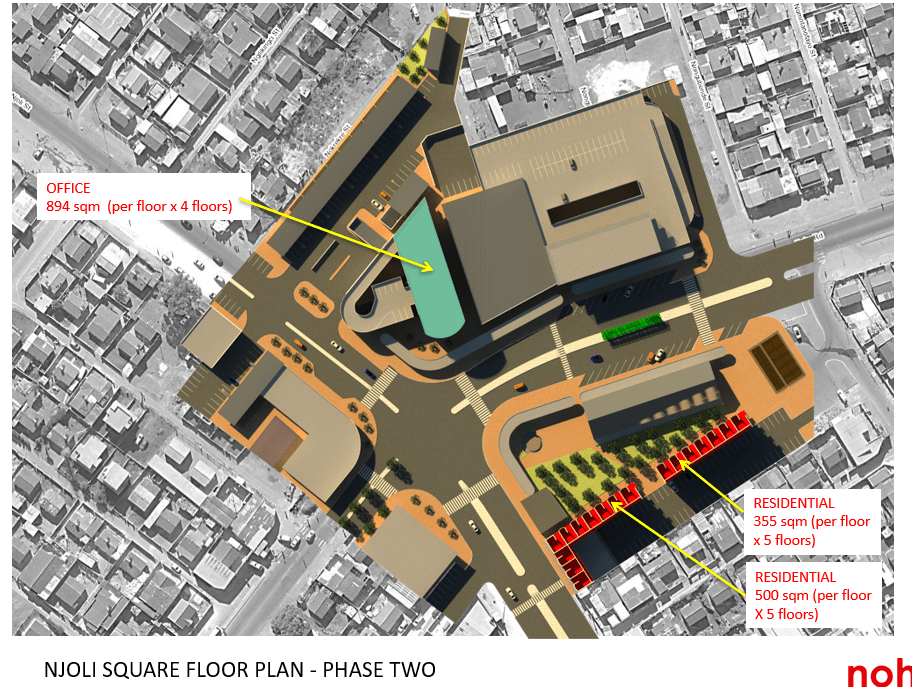
What Remains
The intersection is still there. The informal traders are still there. The transit demand is still there. Kwazakhele is still a dormitory suburb, still waiting for the kind of investment that would change that equation.
The Njoli Precinct Plan represents what urban design at its best can look like: technically sound, economically grounded, socially purposeful, and spatially resolved. That it was shelved is a loss — not just for the project, but for the people it was designed to serve.

